
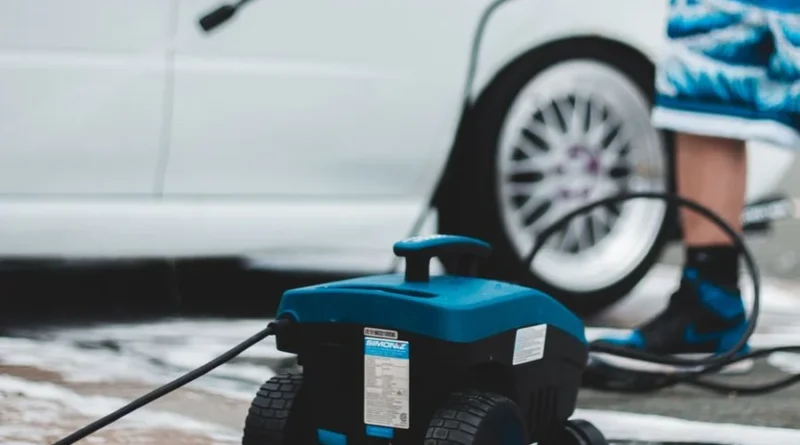
DeWalt DWPW2600 Electric Jobsite Pressure Washer Review
The DeWalt DWPW2600 electric jobsite pressure washer is a corded 13-amp cleaning machine rated at 2,600 maximum PSI and 1.1 gallons per minute (GPM). Built inside a heavy-duty steel roll cage weighing just 27.3 pounds, it gives contractors and homeowners portable washing power that runs off a standard 120-volt outlet without gas fumes or engine maintenance.
If you have ever hauled a 65-pound gas washer out of a pickup bed just to rinse dried stucco mud off a walkway or strip winter grime from cedar siding, you know the frustration of sticky carburetors and stale fuel. On the flip side, cheap plastic electric washers from big-box stores tip over the moment you tug the hose around a corner. DeWalt engineered the DWPW2600 specifically to bridge that gap between fragile residential toys and heavy gas rigs.
Whether you are prepping exterior siding before applying fresh interior and exterior paint coats or degreasing shop equipment, choosing the right pressure washer comes down to water flow, pump longevity, and jobsite portability. Below, we break down the exact pump ratings, nozzle behavior, amperage limits, and maintenance steps you need before buying the DeWalt DWPW2600.
Table of Contents
What Is the DeWalt DWPW2600 Electric Jobsite Pressure Washer?
The DeWalt DWPW2600 is a compact, roll-cage corded electric pressure washer certified by the Cleaning Equipment Trade Association (CETA) to deliver up to 2,600 pounds per square inch (PSI) of water pressure and 1.1 GPM of water flow. It uses a 13-amp universal electric motor paired with an axial cam pump to produce 2,860 cleaning units for siding, concrete, and fleet washing.
Before comparing numbers on a retail box, it helps to define the core terms used by the Cleaning Equipment Trade Association (CETA) under its CPC-100 performance standard. PSI (Pounds per Square Inch) measures the stripping force that breaks the bond between dirt and a surface. GPM (Gallons Per Minute) measures the volume of water that flushes that loosened debris away. Multiplying PSI by GPM gives you Cleaning Units (CU), which is the true benchmark of washing speed.
With a peak rating of 2,600 PSI and 1.1 GPM, the DWPW2600 generates 2,860 maximum cleaning units. From what we have seen testing electric washers on stained aggregate driveways, residential units under 2,000 PSI leave behind zebra stripes unless you hold the wand three inches from the stone. Stepping up to 2,600 PSI lets you hold the nozzle eight to ten inches above the concrete, widening your cleaning path and cutting wash time by nearly a third.
How the Compact Roll-Cage Frame Protects the Pump
Unlike vertical plastic tower washers that snap their hose reels when dropped off a tailgate, the DWPW2600 sits inside a welded tubular steel roll cage. According to DeWalt’s official tool specifications, this frame footprint is 69 percent more compact than traditional two-wheel vertical carts, taking up roughly the same floor space as a five-gallon bucket.
The frame supports dual-orientation operation. You can stand the unit upright when rolling it across a driveway using its telescoping luggage-style handle and rear wheels, then lay it flat on its rubberized skid feet before pulling the trigger. Laying the cage flat drops the center of gravity to just a few inches off the pavement, making it impossible to tip over when you pull the high-pressure hose around a truck tire.

How Does the 13-Amp Motor and Axial Cam Pump Perform?
The DWPW2600 pairs a 13-amp, 120-volt universal electric motor with a sealed aluminum axial cam pump equipped with a Total Stop System (TSS). This setup draws enough wattage to sustain high pressure while leaving a two-amp safety cushion on standard 15-amp residential circuit breakers.
Let’s bust a common myth about electric pressure washers right away. Many buyers assume a 14.5-amp or 15-amp electric motor is always superior to a 13-amp motor. In reality, running a 14.5-amp universal motor at peak startup load on a standard 15-amp household GFCI outlet often trips the breaker, especially if a garage freezer or shop light shares that same electrical circuit. By tuning the DWPW2600 motor to a steady 13 amps, DeWalt prevents nuisance breaker trips on temporary jobsite power spiders and older residential exterior outlets.
Axial Cam Pump Mechanics and the Total Stop System (TSS)
Inside the housing sits a maintenance-free axial cam pump. An axial cam pump uses three stainless-steel pistons driven by a slanted swashplate that rotates directly on the motor shaft. Because the pump crankcase is permanently sealed with synthetic lubricant at the factory, you never have to change pump oil or check sight glasses.
To protect the internal water seals, DeWalt integrates a Total Stop System (TSS) pressure switch. In a gas pressure washer, releasing the spray gun trigger forces water to circulate inside a small bypass loop, which heats the water to over 140 degrees Fahrenheit and melts the rubber pump seals within two minutes. On the DWPW2600, the TSS sensor detects the pressure spike the instant you let go of the trigger and cuts power to the 13-amp motor within one second. Squeeze the trigger again, and the motor restarts instantly.
- Maximum Water Pressure: 2,600 MAX PSI at initial discharge per CSA internal pressure testing.
- Rated Water Flow: 1.1 GPM (CETA-certified flow rate).
- Electrical Requirement: 120V AC, 60 Hz, 13 Amps with inline GFCI plug.
- Pump Architecture: Sealed aluminum axial cam pump with automatic thermal relief and TSS shutoff.
- Dry Weight: 27.3 lbs (12.4 kg) with onboard accessory storage.
Which Nozzles and Accessories Come With the DeWalt DWPW2600?
Out of the box, the DeWalt DWPW2600 includes a metal spray wand with 1/4-inch quick-connect fittings, a 25-foot kink-resistant high-pressure hose, a 35-foot GFCI power cord, a removable soap bottle applicator, and four color-coded spray tips: 15-degree, 25-degree, 40-degree, and a rotating Turbo nozzle.
Having four dedicated tips tucked into rubber grommets right on the frame means you aren’t hunting through your truck glovebox for a nozzle mid-job. Notice that DeWalt intentionally excludes the red 0-degree pinpoint tip. Professional contractors rarely use 0-degree nozzles because a pencil-thin 2,600 PSI stream will gouge wood deck boards, etch concrete mortar joints, and slice through work boots.
Choosing the Right Spray Tip for Every Surface
Each included quick-connect nozzle changes the fan angle and impact pressure of the water jet. Matching the tip to your surface prevents costly damage during exterior home renovation projects.
- Turbo Nozzle (Rotating Zero-Degree Cone): Inside this black cone sits a ceramic bearing that spins a zero-degree water jet in a rapid circle at roughly 3,000 RPM. It combines the stripping punch of a narrow stream with the coverage width of a 25-degree fan. Use it exclusively on hard, unpainted masonry, brick walkways, and cured concrete slabs.
- 15-Degree Chisel Tip (Yellow/Orange): This narrow fan acts like a scraper blade. Use it at a 45-degree angle to strip peeling paint, remove caked mud from steel mower decks, or clean oil stains off garage floors.
- 25-Degree Flushing Tip (Green): This is your everyday all-purpose washing nozzle. It carries enough force to lift green algae off vinyl siding, composite decking, and aluminum gutters without scarring the underlying material.
- 40-Degree Wide Rinse Tip (White): A gentle, wide-angle fan designed for rinsing soapy cars, trucks, patio furniture, and window screens where high impact would bend fins or strip clear coat.

How Does the Hose, Cord, and Onboard Storage Hold Up on Jobsites?
The DWPW2600 provides a 60-foot combined working reach using its 35-foot power cord with inline Ground Fault Circuit Interrupter (GFCI) protection and a 25-foot braided high-pressure hose. Both the hose and cord wrap directly around integrated frame brackets, while the two-piece wand clips onto the side rail.
We have noticed that standard PVC hoses bundled with entry-level electric washers coil up like stiff springs in cold weather, fighting you every step of the way. While DeWalt’s 25-foot kink-resistant hose is much more flexible than cheap plastic tubing, it still retains some memory when uncoiled on a 45-degree morning. A quick trick we use on the jobsite is laying the hose out straight in the sun for ten minutes and running water through it before turning on the motor switch.
Both ends of the hose use standard M22-14mm threaded fittings with rubber O-ring seals. Because DeWalt stuck with universal M22 threads rather than proprietary plastic bayonet clips, you can easily attach an aftermarket 50-foot steel-braided Uberflex hose or a short stubby swivel gun for washing vehicles in tight garage bays, right alongside your heavy automotive torque tools and socket sets.
What Warnings Should You Know About Extension Cords and Winter Care?
Never run the DeWalt DWPW2600 on a light-duty 16-gauge indoor extension cord, and never store the pump in an unheated garage over winter without flushing it with pump antifreeze. Voltage drop from thin cords burns out electric windings, while trapped freezing water cracks the cast aluminum pump manifold.
Here is a critical electrical warning based on National Electrical Code (NEC) voltage drop standards. The included 35-foot power cord is built to plug directly into a wall receptacle. If you must use an extension cord to reach a distant fence line, only use a heavy-duty, outdoor-rated 12-gauge (12 AWG) cord no longer than 25 feet, or a 10-gauge (10 AWG) cord up to 50 feet. Using a thin 16-gauge orange yard cord starves the 13-amp motor of voltage during startup surges, overheating the capacitor and voiding your three-year limited warranty.
Consider a real scenario we see every April at repair shops. A homeowner finishes washing their patio in November, disconnects the garden hose, and rolls the pressure washer into an unheated shed. About three tablespoons of water remain trapped inside the axial cam pistons. When temperatures drop to 25 degrees Fahrenheit, that water expands into ice and splits the internal aluminum housing. The next spring, the washer sprays water out of the bottom of the frame the moment you turn on the spigot. Always thread a $10 can of RV/pump winterizer guard onto the brass garden hose inlet and run it for five seconds before winter storage.
How Does the DeWalt DWPW2600 Compare to Other Jobsite Washers?
Compared to the smaller DeWalt DWPW2100 (2,100 PSI) and DWPW2400 (2,400 PSI), the DWPW2600 delivers 500 more PSI of stripping force and adds a rotating Turbo nozzle while sharing the same compact roll-cage footprint. Against gas units, it trades raw GPM volume for indoor-safe, zero-emission operation and one-hand portability.
To help you see where the DWPW2600 fits in the current tool lineup, compare its core ratings against its main electric and gas rivals:
- DeWalt DWPW2600 (13-Amp Corded): 2,600 MAX PSI | 1.1 GPM | 27.3 lbs | Steel roll cage, 25-ft hose, 4 tips + soap bottle. Best for contractors and homeowners who want maximum 120V stripping pressure in a truck-friendly cage.
- DeWalt DWPW2100 (13-Amp Corded): 2,100 MAX PSI | 1.2 GPM | 24.0 lbs | Smaller roll cage, 20-ft hose, 3 tips + turbo. A lighter alternative if you mostly wash trucks, ATVs, and wood decks where 2,600 PSI isn’t needed.
- DeWalt DCPW550B (20V MAX Cordless Power Cleaner): 550 MAX PSI | 1.0 GPM | 5.5 lbs | Draws water from a bucket. Great for rinsing muddy boots or HVAC coils where no power outlet exists, but lacks the pressure for concrete or siding.
- Mid-Range 200cc Gas Pressure Washer: 3,100 PSI | 2.4 GPM | 65.0 lbs | Cleans large two-car driveways twice as fast due to double the GPM flow, but requires gasoline, oil changes, winter fuel stabilizer, and two people to lift into a van.
Our personal recommendation: Buy the DeWalt DWPW2600 if you want a grab-and-go machine that lives on a garage shelf, slides under a truck tonneau cover, and blasts moss off brick walkways without waking the neighbors at 7:00 AM. If you plan to run a 15-inch surface cleaner attachment across a 3,000-square-foot concrete driveway every weekend, step up to a gas unit with at least 2.5 GPM of water flow.
Frequently Asked Questions
Can the DeWalt DWPW2600 clean concrete driveways and brick patios?
Yes, the DeWalt DWPW2600 cleans concrete driveways, brick pavers, and stone walkways effectively when paired with the included rotating Turbo nozzle or the 15-degree chisel tip. Its 2,600 MAX PSI rating breaks loose embedded black algae, moss, and tire marks. Because its flow rate is 1.1 GPM, you should work in three-foot sections and rinse loosened dirt toward the street with the 25-degree nozzle afterward.
Does the DeWalt DWPW2600 require special detergent or proprietary soap?
No, you do not need proprietary DeWalt soap to use the included detergent applicator bottle. Unlike older washers that siphon soap directly through the internal pump seals, the DWPW2600 attaches its foam bottle to the end of the spray wand downstream of the pump. You can fill it with any standard biodegradable house wash, car wash shampoo, or deck brightener without risking internal pump corrosion, though you should never run raw bleach through the brass quick-connect collar.
Why does my DeWalt DWPW2600 pulse or surge when I pull the trigger?
Pulsing or surging pressure is almost always caused by trapped air bubbles in the garden hose or a partially clogged nozzle tip. Before switching on the electric motor, connect your garden hose and squeeze the spray gun trigger for 30 seconds until a steady, bubble-free stream of water flows out of the wand. If pulsing continues during use, remove the quick-connect nozzle tip and push a thin wire cleaning pin through the orifice to clear any lodged sand grains.
Can you use hot water in the DeWalt DWPW2600 electric pressure washer?
No, the DeWalt DWPW2600 is designed strictly for cold water supply connections up to a maximum inlet temperature of 104 degrees Fahrenheit (40 degrees Celsius). Feeding hot water from a utility sink or water heater into the axial cam pump will warp the internal check valves and soften the rubber high-pressure seals. For greasy automotive parts or oil stains, apply a cold-water citrus degreaser through the soap bottle and let it dwell for ten minutes before blasting with cold water.
Will the DeWalt DWPW2600 trip a standard 15-amp household breaker?
Under normal operation, the DWPW2600 will not trip a dedicated 15-amp, 120-volt household circuit breaker because its motor draws 13 amps. That leaves a two-amp safety margin below the circuit limit. If your breaker trips, check that no high-draw appliances like a garage refrigerator, air compressor, or space heater are running on the same circuit, and avoid using long, thin extension cords that spike amperage draw.
Can you draw water from a standing bucket or rain barrel with the DWPW2600?
No, the DeWalt DWPW2600 is not a self-priming siphon pump and requires a pressurized garden hose supply delivering at least 20 PSI and 1.5 GPM of incoming city or well water. Running the axial cam pump dry while trying to suck water out of a static five-gallon bucket causes immediate cavitation and melts the water seals within 60 seconds. Always verify your outdoor spigot is turned fully open before pressing the power switch.
How does the DeWalt DWPW2600 compare to the Ryobi 2,600 PSI electric washer?
While both machines share similar peak pressure ratings around 2,600 PSI and 1.1 to 1.2 GPM flow rates, the DeWalt DWPW2600 is built around a compact welded steel roll cage designed to lie flat on jobsite floors and stack in work vans. Most competing residential 2,600 PSI washers use tall, upright plastic frames that take up twice as much vertical storage space and tip over more easily when pulling the hose at sharp angles.

Written by Rosella
Rosella is a self-taught digital creator with a passion for breaking down tech, lifestyle, and everyday topics into simple, easy-to-understand content. Based in Youngstown, Ohio, she brings a curious, multi-disciplinary approach to writing, covering everything from the latest tech trends to practical life hacks and personal growth insights.
Her goal is straightforward: take complicated ideas and explain them in a way that actually makes sense, so every reader, whether a total beginner or someone more experienced, walks away having learned something useful. When she’s not writing, you’ll usually find her exploring new tools, sharpening her skills, or spending time with family.
Through this blog, Rosella aims to build a community centered on real, actionable insights rather than fluff, jargon, or filler content.
