
Recurve Bow Arrows: Best Selection & Tuning Guide
Finding the right recurve bow arrows takes time and a bit of trial and error. The arrows you choose will make or break your accuracy, consistency, and overall confidence on the range. You need to match the arrow to your specific bow setup carefully. This means looking closely at materials, spine stiffness, fletching types, and overall physical weight. Many beginners grab any cheap arrows they find online, only to wonder why their shots scatter all over the target block. Understanding the mechanics of arrow flight changes everything. It turns a frustrating guessing game into a precise, predictable science.
Table of Contents
What Are the Best Recurve Bow Arrows?
The best recurve bow arrows match your bow’s draw weight, your specific draw length, and your personal shooting style. According to coaching manuals from USA Archery, carbon arrows offer the best balance of speed and durability for most modern archers. From what we have seen on the practice range, archers who switch to matched carbon arrows tighten their groups almost instantly. We have noticed that beginners often start with cheap fiberglass arrows, which quickly hold back their progress. Spending a little extra on quality shafts makes learning proper form much easier.
One detail you might not find elsewhere is how the physical weight of the arrow directly affects your bow’s noise and vibration. A heavier arrow absorbs more energy from the bow limbs upon release. This leaves less residual vibration in the bow itself, resulting in a significantly quieter shot. A myth many beginners believe is that faster arrows always equal better accuracy. In reality, a slower, perfectly tuned heavy arrow will outshoot a fast, poorly tuned arrow every single time. A quick warning: never shoot an arrow that is too light for your bow. This acts like a dry fire and can crack your limbs.
I highly recommend starting with a mid-range carbon arrow if you shoot a modern Olympic or barebow setup. For traditional bows, wood or aluminum offers a great feel and a classic aesthetic. You might want to check out local outdoor spaces to practice your shots safely once you have your gear dialed in.
Understanding Arrow Materials: Carbon, Aluminum, and Wood
Archers have three main choices when it comes to arrow shaft materials. These are carbon, aluminum, and wood. Each material behaves differently when shot from a recurve bow, and each has its own devoted following. Knowing the pros and cons helps you pick the right tool for your specific goals.
Carbon arrows are light, fast, and incredibly durable. They have become the gold standard for both outdoor target shooting and bowhunting. Their light physical weight gives them a flatter trajectory through the air. This means the arrow drops less over long distances, making aiming much easier. If you hit a hard target frame or a rock, carbon usually survives or breaks cleanly. It rarely bends. This makes it a very safe and reliable choice for archers who spend a lot of time in the woods or on rugged 3D courses.
Aluminum arrows are highly consistent and generally very affordable. They weigh more than carbon shafts of a similar size. This extra weight makes them incredibly stable for indoor shooting at short distances. Many top indoor competitors still use large-diameter aluminum arrows to catch the scoring lines on the target face. However, aluminum has a major downside. It can bend permanently on heavy impact. Once an aluminum shaft bends, it rarely flies straight again, even if you try to straighten it.
Wood arrows offer a traditional look and feel that modern materials simply cannot match. They are beautiful, authentic, and historically significant. Traditional longbow and recurve shooters love them for historical accuracy and the quiet thud they make upon impact. But wood is much less durable and less consistent than modern factory materials. Every wooden shaft has its own unique weight and spine variations. You have to sort, weigh, and spine-test them carefully to build a matched set that groups well together.
The World Archery Federation sets strict rules on maximum arrow diameters for indoor and outdoor competition. Keep those rules in mind if you plan to compete in sanctioned tournaments.
The Technical Science of Arrow Spine
Arrow spine refers to the physical stiffness and bending resistance of the arrow shaft. Getting this measurement right is the single most important part of tuning your bow, according to engineers at Easton Archery. We have noticed that many archers buy arrows based on length alone. This is a huge mistake. From our experience, an arrow with the wrong spine will never group tightly, no matter how good your shooting form is.
Many people think spine just means the physical weight of the arrow. This is a common and frustrating myth. Spine is purely about bending resistance. A warning for new shooters: guessing your spine usually ends in frustration and wasted money. Always use a proper chart or consult a pro shop before buying a dozen shafts. I recommend buying just two or three bare shafts to test before investing in a full fletched set.
When you release the bowstring, massive force hits the back of the arrow instantly. The shaft has to bend slightly to absorb this energy. If it bends too much or too little, the arrow will veer aggressively off course. Let us break down how this mechanical process actually works.
Dynamic vs Static Spine: Matching Stiffness to Your Setup
Static spine is the measured stiffness of the arrow shaft at rest in a factory. Manufacturers measure this by hanging a specific physical weight from the center of the shaft and measuring exactly how much it sags in the middle. A lower number, like 300, means a very stiff arrow. A higher number, like 600 or 700, means a much weaker, more flexible arrow. This number is what you see printed on the side of the shaft.
Dynamic spine is how the arrow actually bends in the real world under massive acceleration from the bowstring. Many things influence dynamic spine, making it tricky to perfect. Your draw weight is the biggest factor by far. A heavier bow applies more force, so it needs a stiffer arrow. Arrow length also matters immensely. Cutting an arrow shorter makes it dynamically stiffer, much like a short stick is harder to bend than a long stick. Leaving it longer keeps it acting weaker.
Point weight changes the dynamic spine drastically too. Putting a heavy point on the front makes the front heavy and slow to move, which forces the middle of the arrow to act weaker and bend more. A lighter point makes it act stiffer. Even your finger release changes things. A clean, smooth release puts less side-to-side force on the arrow. A plucked, messy release adds more bending force, complicating the tune.
The Archer’s Paradox: How Arrows Flex and Stabilize in Flight
The Archer’s Paradox is a fascinating physical phenomenon unique to traditional and recurve archery. It describes exactly how an arrow must bend horizontally around the bow’s riser to fly straight toward the target. When you release the string, the string pushes the back of the arrow forward aggressively. The front of the arrow resists moving instantly due to its own inertia and the weight of the point. The back of the arrow moves forward faster than the front, causing the shaft to buckle and bend.
For a right-handed shooter, the arrow first bends away from the bow riser to the left. Then it snaps back violently and bends the other way to the right. It wiggles through the air like a snake, snaking completely around the riser without hitting the wood or metal. This is exactly why spine is so critical. If the spine matches your bow perfectly, the arrow clears the bow cleanly every time.
If the spine is too stiff, the arrow does not bend enough to get around the bow. It will veer sharply to the left. If the spine is too weak, the arrow bends too much. It will veer to the right and might even slap hard against the riser. We have seen hunters tracking targets miss completely because their arrows were too stiff to bend properly around the bow.
Fletching Options: Feathers vs Plastic Vanes
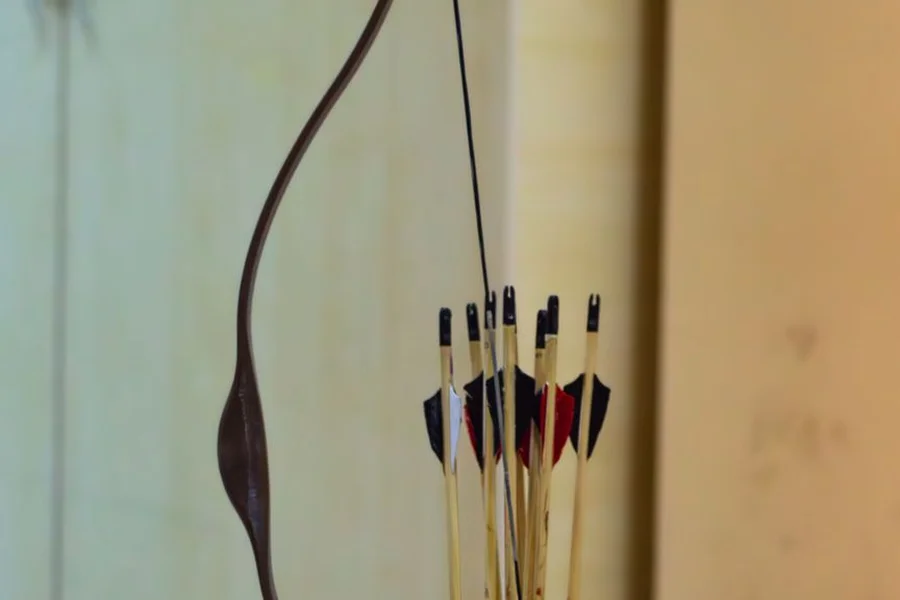
Fletching refers to the small fins glued on the back of the arrow that keep it flying straight. Traditional archers shooting off the shelf must use natural feathers, as confirmed by historical archery experts. We have spent hours testing different fletchings in heavy crosswinds. We have noticed that feathers stabilize a heavy, poorly tuned arrow much faster, but vanes hold speed significantly better over long distances. From what we have seen, choosing the wrong fletching for your specific arrow rest causes severe flight issues.
One unique detail is how fletching noise affects bowhunting. Large, high-profile feathers make a loud hissing sound in flight. This noise can actually startle fast animals before the arrow even arrives. A common myth is that feathers are completely ruined if they get wet in the rain. While they do mat down terribly when wet, a quick treatment with special waterproofing powder keeps them working perfectly in a downpour. A strong warning: do not shoot stiff plastic vanes off a hard wooden shelf. The vane will kick the arrow wildly off course and could damage the bow. I recommend using 4-inch parabolic feathers if you shoot a traditional wooden recurve.
Why Traditional Archers Shooting “Off the Shelf” Require Feathers
Shooting “off the shelf” means resting the arrow directly on the curved wooden cutout of the bow above the grip handle. Many traditional recurves and longbows lack threaded holes for modern elevated arrow rests. When you shoot this primitive way, the back of the arrow rubs firmly against the wood as it passes during the shot cycle.
Feathers are absolutely essential for this traditional setup. A natural turkey or goose feather is incredibly soft and flexible. When the feather hits the hard bow shelf, it simply collapses flat against the shaft. It slides past the wood without disrupting the arrow’s straight flight path. Once it clears the bow completely, the feather pops right back up to catch the air and steer the arrow.
This forgiving nature makes feathers perfect for traditional archery. They provide massive drag and incredible steering power. This helps stabilize heavy wooden or heavy carbon hunting arrows very quickly out of the bow. However, feathers require significant maintenance. They get damaged easily if you pack them tightly in a hard case. They also cost more than cheap plastic options.
Rigid Vanes: The Best Choice for Elevated Rest Setups
Plastic vanes are incredibly rigid and extremely durable. Modern Olympic recurve bows and many modern hunting recurves use elevated arrow rests instead of the wooden shelf. These rests hold the arrow slightly away from the metal riser. They often feature a small wire or plastic flipper arm that drops completely out of the way or flexes easily when the arrow passes.
Because the arrow has ample clearance, you can use rigid plastic vanes without issue. If you shot a stiff plastic vane off a hard wooden shelf, the vane would hit the wood and bounce hard. This violently kicks the back of the arrow to the side, completely ruining your shot and accuracy. An elevated rest provides the exact clearance needed for vanes to pass safely.
Vanes are naturally waterproof and incredibly tough. They survive passing completely through grass, dirt, and dense target bales. They create much less drag than feathers, which helps the light carbon arrow maintain its speed over long outdoor target distances. Many target archers use tiny, low-profile spin vanes. These light vanes catch the air and induce spin quickly to stabilize thin carbon shafts in the wind.
Top Arrow Brands for Recurve Archers
The top arrow brands for recurve archers include Easton and Gold Tip, known worldwide for their rigorous straightness tolerances. According to tournament equipment logs from the USA Archery Nationals, these two brands dominate the competitive field. From our own extensive testing over the years, we have seen these shafts take severe abuse and keep flying perfectly straight. We have noticed that budget brands often have huge weight variations from shaft to shaft, ruining any chance of consistency.
One unique detail about high-end arrows is the spine consistency around the entire circumference of the shaft. Cheaper arrows have a stiff side and a weak side. You have to manually find this stiff side and align your fletching to it for every single arrow. High-end shafts are manufactured perfectly uniform all the way around. A myth many beginners believe is that expensive arrows automatically make you a better, more accurate shooter. They do not. Good shooting form always matters most. Warning: buying counterfeit arrows from discount sites is incredibly dangerous; they can shatter upon release and injure your hand. I recommend sticking to authorized local dealers for these top brands.
Easton Archery: Industry Standards for Target and Hunting
Easton Archery is arguably the most famous name in arrow manufacturing history. They have supplied Olympic champions for decades and set the standard for quality. Their massive product line covers every possible need for a recurve archer, from beginners to gold medalists. For beginners, the Easton Jazz is a legendary aluminum arrow. It is very affordable and tough enough to survive rough youth programs.
For intermediate target shooters, the Easton Inspire provides a great entry into skinny carbon shafts. It offers good durability and very reasonable straightness tolerances for the price. As you move up in skill, the Easton Avance is a fantastic mid-tier carbon arrow. It has a small micro-diameter to cut through the heavy crosswind. It provides excellent performance for outdoor target archery without completely breaking the bank.
Easton also makes elite high-end aluminum-carbon composite arrows like the famous X10. These are the exact shafts you see at the Olympic games. They have a thin aluminum core wrapped tightly in carbon fiber. This creates a heavy, micro-diameter arrow that practically ignores wind drift. They are extremely expensive but offer absolutely unmatched precision at ninety meters. You can view their full lineup at Easton Archery.
Gold Tip: Extremely Durable Carbon Arrows
Gold Tip is another massive player in the global arrow market. They built their rugged reputation on making incredibly tough, 100% pure carbon arrows. While they are very popular with compound bow hunters, their Traditional line is absolutely perfect for recurve shooters who hunt or shoot 3D courses.
The Gold Tip Traditional arrow looks exactly like a classic wood shaft from a distance. They print a highly realistic wood grain finish on the outside of a modern carbon tube. This gives you the nostalgic look of a wooden arrow with the brutal durability and straightness of modern carbon. It is a massive favorite among traditional bowhunters who want the best of both worlds.
Gold Tip arrows are known for their heavy weight per inch. This makes them great for hunting large game with a recurve bow. A heavy arrow absorbs more energy and penetrates much deeper into a target. They also offer a unique custom weight system. You can screw small brass weights into the back of the insert. This lets you tune the point weight precisely without buying dozens of new screw-in field points.
How to Select and Tune Your Arrow Setup
Selecting and tuning your arrow setup requires carefully matching the manufacturer’s spine chart to your exact draw length and holding weight. Professional bow mechanics note that 90% of tuning issues stem from incorrect arrow length or the wrong point weight. We have seen archers struggle for months with poor accuracy, only to fix it completely in ten minutes by changing their point weight. We have noticed that adding just 20 grains of weight to the front of the arrow often fixes a stiff flight issue instantly.
A detail many shooters overlook is exactly how string material affects tuning. A modern fast-flight string transfers more energy abruptly, making the arrow act weaker. A classic Dacron string transfers less energy slowly, making the arrow act stiffer. A myth is that you can just cut your arrows shorter to make them fly faster without any consequences. Cutting them shorter drastically stiffens the spine and ruins the tune entirely. A practical warning: do not use a lighter spine than the chart recommends for your bow. The weak arrow could snap in half upon release and cause severe injury to your bow hand. I recommend leaving your arrows an inch long initially so you have plenty of room to trim them during the tuning process.
Utilizing Manufacturer Spine Charts Correctly
Every reputable arrow manufacturer provides a detailed spine selection chart online. Learning to read this chart correctly is your very first step. First, you absolutely need to know your actual dynamic draw weight. Do not just read the printed sticker on your bow limbs. The sticker weight is usually measured at a standard 28-inch draw length in a factory.
If you have long arms and draw the bow back 30 inches, you are pulling much more weight than the sticker says. If you draw it 26 inches, you are pulling much less. Use a digital bow scale at a pro shop to measure the exact holding weight at your specific full draw. Next, measure your arrow length. This is usually measured from the deep groove in the nock to the end of the carbon shaft.
Take your exact holding draw weight and your specific arrow length to the manufacturer chart. Find exactly where the column and row intersect. The chart will suggest a specific spine number, like 400, 500, or 600. This is just a starting point. Your personal release technique, bow efficiency, and string type will dictate the final perfect match.
Bare Shaft Testing: Verifying Clean Bow Clearance
Bare shaft testing is the gold standard for tuning recurve bow arrows perfectly. It proves without a doubt whether your dynamic spine is correct. You perform this test by shooting completely unfletched arrows alongside your normal fletched arrows into a target at 15 to 20 yards. Fletchings correct poor arrow flight in the air. A bare shaft has no steering correction, so it reveals the true, raw flight path coming out of the bow.
Shoot three fletched arrows to establish a solid group in the target. Then, shoot two bare shafts, aiming at the exact same spot on the target face. For a right-handed shooter, look very closely at where the bare shafts hit relative to the fletched group.
If the bare shafts hit far to the left of the fletched group, your arrows are acting too stiff. You need to increase point weight, increase draw weight, or buy a weaker spine shaft. If the bare shafts hit to the right, your arrows are acting too weak. You need to decrease point weight, decrease draw weight, or cut the shafts shorter. When the bare shafts hit right in the middle of the fletched group, your tune is perfect.
Frequently Asked Questions
Understanding recurve bow arrows often brings up many complex questions. We have compiled the most common questions from beginners and experts alike. Getting these fundamental answers right will save you massive amounts of time and money on the range. If you are setting up a nice home range, checking out appliance and range options for your property might be a fun side project.
What is the most important factor when choosing recurve bow arrows?
The single most important factor is the arrow spine. If the spine is too stiff or too weak, the arrow will absolutely not fly straight. It will wobble erratically through the air and hit the target inconsistently. Getting the spine matched perfectly to your bow’s draw weight and your personal draw length ensures proper, clean flight. Everything else, like material and brand, is secondary to a matching spine.
Can I shoot plastic vanes off a traditional recurve shelf?
You should completely avoid shooting plastic vanes off a hard wooden shelf. The rigid plastic hits the hard wood and bounces aggressively. This violently kicks the tail of the arrow sideways. It causes terrible accuracy and erratic arrow flight. Always use natural feathers when shooting directly off the shelf. Feathers collapse flat and slide past the wood without disrupting the shot.
What is the difference between carbon and aluminum arrows?
Carbon arrows are much lighter, faster, and significantly more durable than aluminum shafts. They tend to flex and return to shape perfectly even after hitting a hard target frame. Aluminum arrows are much heavier, which makes them very stable for indoor target shooting. However, aluminum arrows can bend permanently if they hit something hard or glance off another arrow in the target.
What happens if my arrow spine is too weak?
If your arrow spine is too weak, the shaft bends entirely too much during the shot cycle. For a right-handed archer, a weak arrow will veer far off to the right side of the target. The back end of the arrow might also slap violently against the riser of the bow as it passes. This causes loud noise, erratic flight, and terrible grouping on the target.
What is the Archer’s Paradox?
The Archer’s Paradox is the physical action of the arrow bending horizontally around the bow riser. When the heavy string pushes the back of the arrow, the shaft buckles. It bends away from the bow, then snaps back, wiggling through the air in a snake motion. This necessary bending allows the arrow to fly straight toward the target without hitting the side of the bow.
How do I know what size arrow to buy?
You determine proper arrow size by measuring your exact draw length. Draw the bow back to your comfortable face anchor point. Have a friend mark the arrow shaft exactly where it meets the front edge of the bow riser. Add one to two full inches to this measurement for safety. This gives you your correct arrow length. You then use this specific length and your draw weight on a manufacturer’s spine chart to find the correct size.
Do Olympic recurve archers use carbon or aluminum arrows?
Olympic recurve archers use specialized composite arrows that brilliantly combine both materials. These arrows, like the Easton X10, feature an extremely thin aluminum core wrapped tightly in high-strength carbon fiber. This design makes the arrows extremely heavy and incredibly thin. This micro-diameter profile cuts through the heavy wind perfectly, allowing for extreme accuracy at long ninety-meter distances.

Written by Rosella
Rosella is a self-taught digital creator with a passion for breaking down tech, lifestyle, and everyday topics into simple, easy-to-understand content. Based in Youngstown, Ohio, she brings a curious, multi-disciplinary approach to writing, covering everything from the latest tech trends to practical life hacks and personal growth insights.
Her goal is straightforward: take complicated ideas and explain them in a way that actually makes sense, so every reader, whether a total beginner or someone more experienced, walks away having learned something useful. When she’s not writing, you’ll usually find her exploring new tools, sharpening her skills, or spending time with family.
Through this blog, Rosella aims to build a community centered on real, actionable insights rather than fluff, jargon, or filler content.
