
Torque Wrench for Axle Nut: Best Size & Guide
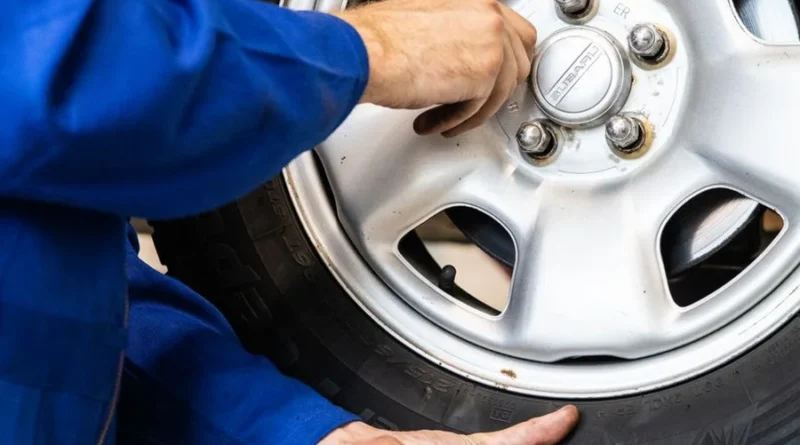
Choosing the right torque wrench for an axle nut requires a heavy-duty half-inch drive tool rated for at least 250 foot-pounds. Axle nuts secure wheel bearings and constant velocity axles, demanding precise clamping force to prevent premature bearing failure.
When you replace a wheel bearing, front CV axle, or hub assembly on your car, tightening the spindle nut is the most critical step of the entire repair. Guessing the tightness with a standard wrench or hammering it with an air gun can destroy new components within a few hundred miles. Using a dedicated torque wrench ensures your vehicle remains safe on the road.
In this breakdown, we walk through tool specifications, drive sizes, socket selections, and proper mechanical methods so you can tackle your next suspension job with complete confidence.
Table of Contents
Why You Need a Dedicated Torque Wrench for Axle Nuts
You need a dedicated torque wrench for axle nuts because suspension hub assemblies require specific rotational force to seat the internal bearing races correctly. Without precise torque measurement, you risk either loose wheel assemblies or crushed bearing seals.
An axle nut does far beyond simply keeping the wheel attached to the vehicle. It applies precise lateral pressure against the inner and outer bearing races inside the hub. When you drive down the highway at 65 miles per hour, your wheel bearings support the entire weight of your vehicle while spinning thousands of times every minute. Precise tension keeps the steel ball bearings rolling smoothly along their tracks without excessive friction.
Many backyard mechanics assume that tightening an axle nut as hard as possible with a long pipe is sufficient. Automotive engineers at the Society of Automotive Engineers have proven that over-tightening is just as destructive as leaving fasteners loose. A calibrated torque wrench provides the exact measurement required by vehicle factory repair manuals.
From what we have seen in home garages, skipping this tool is the number one cause of new wheel bearings failing within the first year of installation. Spending a few extra minutes to verify your factory specifications protects your repair investment and prevents roadside breakdowns.
The Critical Role of Wheel Bearing Preload
Wheel bearing preload refers to the controlled internal pressure placed on bearing components to eliminate excess play while maintaining fluid rotation. The axle nut is the primary tensioning bolt that sets this preload across the entire hub assembly.
Modern vehicles use sealed cartridge bearings or unitized hub assemblies. These parts arrive pre-greased from the factory, but they depend on the axle spindle nut to establish the proper internal clearance. When the nut reaches its target torque, the bearing races lock into their engineered alignment, allowing the wheel to spin freely with zero wobble.
If you enjoy keeping your vehicle running smoothly for long road trips, check out our guide on the lifestyle choices that make hitting the open road effortless. Proper mechanical care makes every road trip far more relaxing.
Proper preload also ensures that your anti-lock braking system sensors read wheel speeds accurately. If the hub assembly has microscopic play due to improper tightening, the ABS sensor ring can wobble past the sensor magnetic pickup, triggering warning lights on your dashboard.
The Dangers of Under-Torquing and Over-Torquing
Under-torquing an axle nut leaves microscopic slack inside the wheel hub assembly. Over time, road bumps cause the loose bearing races to hammer against each other, creating metal shavings, loud humming noises, and eventual wheel detachment.
Over-torquing is equally hazardous because it crushes the internal steel ball bearings against the outer races. This extreme pressure strips away the protective boundary layer of synthetic bearing grease, causing rapid heat buildup, metal fatigue, and catastrophic bearing seizure on the highway.
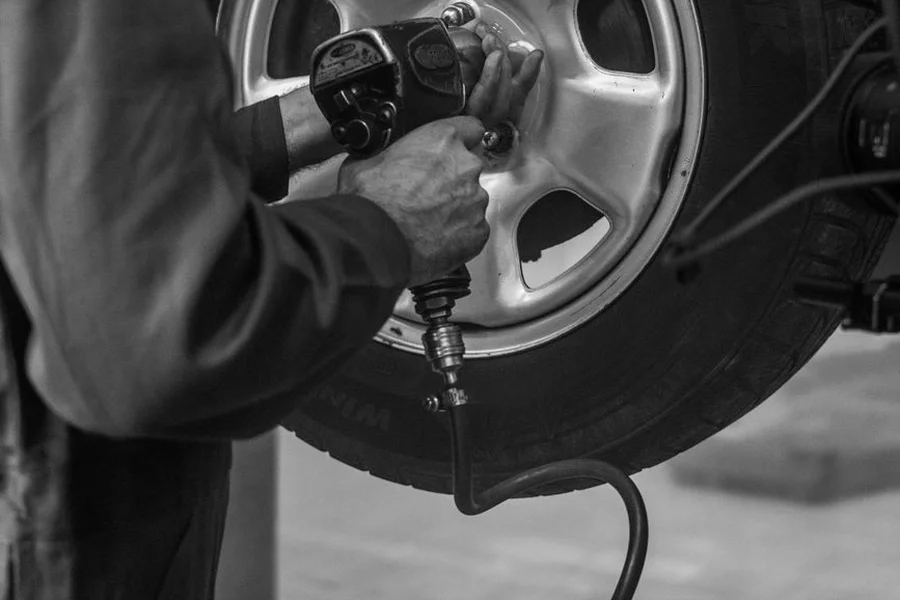
We have noticed that many DIYers mistakenly believe that power tools can approximate torque specs by feel. In reality, impact guns apply erratic hammer blows that frequently strip spindle threads or stretch the steel axle shaft beyond its elastic limits.
Always consult your vehicle owner manual or a factory repair guide before beginning. Target torque numbers can range from 130 foot-pounds on small compact sedans to more than 300 foot-pounds on heavy-duty four-wheel-drive trucks.
Choosing the Right Drive Size and Torque Range
The ideal drive size for axle nut work is a 1/2-inch drive torque wrench with a working range of 50 to 250 foot-pounds. Smaller 3/8-inch wrenches lack the turning power and capacity, while massive 3/4-inch wrenches are reserved for commercial trucks.
Selecting the right drive size ensures both mechanical turning power and measurement accuracy. Torque wrenches operate with the highest precision in the middle 60 percent of their scale. If your car requires 185 foot-pounds, using a 1/2-inch wrench rated up to 250 foot-pounds places your target right in the sweet spot of the tool calibration.
For more insights on how mechanical and computerized tools continue improving automotive repairs, take a look at our review of whats new in the world of automatic technology.
Let us break down the differences across tool drive categories so you pick the best tool for your garage.
1/2-Inch Drive vs 3/8-Inch and 3/4-Inch Options
A 3/8-inch torque wrench typically tops out around 80 to 100 foot-pounds, making it suitable for spark plugs, valve covers, and brake calipers, but completely inadequate for axle nuts. Attempting to force a 3/8-inch wrench to axle nut specs will snap the drive anvil or ruin the internal spring mechanism.
A 1/2-inch drive wrench features a thick steel body measuring 18 to 25 inches in length. This extra handle length gives you the mechanical advantage needed to pull 200 foot-pounds smoothly without straining your back or slipping off the fastener.
A 3/4-inch drive wrench is designed for commercial heavy equipment, large diesel tractors, and industrial machinery. These tools measure over three feet long and handle ratings from 100 to 600 foot-pounds, which is unnecessary for standard passenger cars and SUVs.
For almost every passenger vehicle, minivan, crossover, and light pickup truck, a 1/2-inch drive tool is the undisputed standard.
Understanding Foot-Pound Ratings Across Vehicle Classes
Axle nut torque specifications vary widely based on vehicle weight, drivetrain design, and manufacturer engineering preferences. Compact front-wheel-drive vehicles like the Honda Civic often require 134 foot-pounds, while midsize sedans like the Toyota Camry call for around 217 foot-pounds.
European vehicles frequently use specialized torque-to-yield stretch bolts rather than traditional cast castle nuts. For example, many Volkswagen and Audi models require a baseline torque of 148 foot-pounds followed by an additional 180-degree turn with a breaker bar.
Full-size domestic trucks and heavy SUVs like the Ford F-150 or Chevrolet Silverado can require torque settings exceeding 250 foot-pounds on rear axle retaining nuts. Knowing your specific vehicle class helps you choose a tool that covers your required rating with room to spare.
Always verify whether your vehicle specification calls for dry threads or lightly lubricated threads. Applying anti-seize compound or motor oil to dry-spec threads can increase actual clamping force by up to 30 percent, leading to accidental over-tightening.
Comparing Torque Wrench Types for Suspension Work
The three main types of torque wrenches used for axle nuts are click-type mechanical wrenches, digital electronic wrenches, and classic beam-style wrenches. Each design offers distinct advantages in cost, feedback, and precision.
From our garage experience, click-type wrenches remain the most sensible choice for home mechanics due to their tactile feedback and rugged construction. Digital models provide higher precision and angle measurement, while beam wrenches offer unbeatable calibration longevity at a budget price.
Let us evaluate how each tool design performs during heavy suspension maintenance.
Click-Type Mechanical Wrenches: Durability and Feedback
Click-type torque wrenches use an internal calibrated spring and pawl mechanism inside a knurled steel handle. You twist the handle to align your target foot-pound setting on the micrometer scale, lock the collar, and pull the handle smoothly.
When the tool reaches your target torque, the internal mechanism slips slightly, producing a loud audible click and a distinct tactile pop through the handle. This physical feedback lets you know immediately when to stop pulling, even in noisy garage environments.
Click wrenches are durable, easy to store, and widely available from major tool brands like Tekton, GearWrench, and Pittsburgh Pro. They represent the gold standard for DIY mechanics tackling brake, suspension, and drivetrain projects.
Remember that you must stop applying force the instant you feel the click. Continuing to pull after the click applies unmeasured force and invalidates the reading.
Digital and Electronic Torque Wrenches: Precision and Angle Specs
Digital torque wrenches use electronic strain gauges attached to an internal microprocessor to measure twisting resistance. They display real-time torque readings on an illuminated LCD screen and signal completion with progressive LED lights and audible buzzer beeps.
The biggest advantage of a digital wrench is its ability to measure torque angle. If your vehicle repair manual calls for tightening an axle bolt to 150 foot-pounds plus a 90-degree final turn, a digital angle wrench tracks both measurements in a single tool without needing separate angle gauges.
Digital models also allow you to toggle between foot-pounds, inch-pounds, and Newton-meters with the push of a button, eliminating manual conversion math when following foreign car manuals.
However, digital wrenches require batteries and cost significantly more than mechanical equivalents. If you only replace an axle nut once every few years, a mechanical click wrench offers better value.
Beam-Style Wrenches: Zero Calibration Drift
Beam-style torque wrenches are the simplest measuring tools available. They feature a long bending shaft and a separate indicator needle that points to a printed scale near the handle as the main beam flexes under pressure.
Because beam wrenches rely purely on the physics of steel elasticity without internal springs or electronic circuits, they never lose their calibration over time. If the needle points to zero when resting, the tool is guaranteed to measure accurately.
The primary drawback of a beam wrench is reading the gauge while working in awkward wheel wells. You must keep your eyes directly above the pointer needle to avoid parallax viewing errors, which can be challenging when pulling high force under a vehicle.
Beam wrenches are inexpensive and serve as an excellent calibration reference tool to double-check your click-type wrenches at home.
Essential Tools and Accessories for Axle Nut Replacement
Tightening an axle nut requires alongside the torque wrench itself. You need a dedicated 6-point impact socket, a sturdy breaker bar, and fresh retaining hardware to finish the job safely.
Equipping your toolbox with the proper companion accessories prevents damaged fasteners and keeps your precision tools in pristine working condition.
If you take pride in maintaining your vehicle exterior as well as its mechanical systems, read about keeping vehicles spotless in our guide on richs car wash angleton tx.
Using 6-Point Impact Sockets Over Standard Chrome Sockets
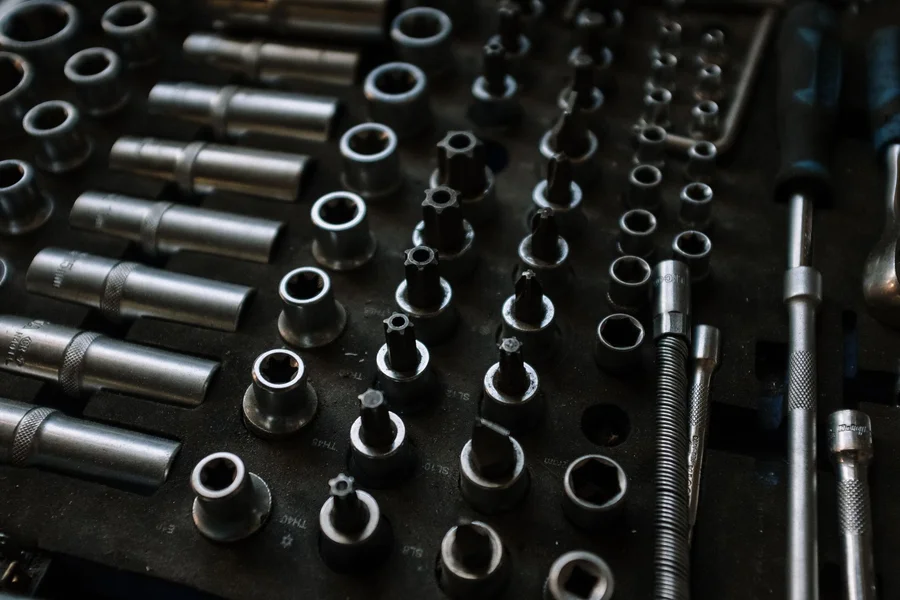
Axle nuts require heavy-walled 6-point impact sockets manufactured from heat-treated chrome molybdenum steel. Standard 12-point chrome sockets have thin walls that can crack or flex under 200 foot-pounds of torque.
A 6-point socket makes broad contact across the flat sides of the axle nut rather than putting pressure on the vulnerable corners. This flat contact prevents rounding off rusted or stubborn fasteners during installation.
Tall extended sockets are mandatory because the threaded end of the CV axle shaft protrudes significantly past the nut face. A shallow socket will bottom out on the axle threads before seating against the nut.
Common axle nut socket sizes range from 30mm to 36mm for import vehicles and 1-1/4 inch to 1-1/2 inch for domestic trucks. Buying a dedicated axle nut socket set ensures you always have the right size on hand.
Breaker Bars vs Torque Wrenches: Protecting Your Measuring Tool
A helpful warning to keep in mind: never use your torque wrench to loosen or break free stubborn axle nuts. A torque wrench is a precision measuring instrument, not a pry bar.
Using a torque wrench to break loose a rusted axle nut shocks the internal pawl and stretches the measuring spring, throwing off its calibration permanently. Always use a 24-inch or 30-inch rigid steel breaker bar to break loose old fasteners.
Once the old nut is loose, remove it with a ratchet or hand socket. Reserve your torque wrench exclusively for the final tightening sequence when the new component is seated.
Using the right tool for each stage of disassembly and assembly prolongs the lifespan of your garage equipment and guarantees accurate torque readings.
Step-by-Step Best Practices for Torquing Axle Nuts
Achieving a reliable installation requires following a clean, methodical assembly process. Properly preparing threads, seating the hub, and releasing tool spring tension ensures consistent results every time.
My personal recommendation is to clean the axle spindle threads with a wire brush and brake cleaner before threading the new nut on by hand. This removes grit and rust that could cause false torque resistance.
Follow these workshop methods for a clean installation.
Setting Vehicle Weight on Ground vs Torquing in the Air
A major debate among mechanics is whether to torque axle nuts while the vehicle is resting on the ground or suspended on jack stands. The proper method depends on your bearing design.
For traditional cartridge bearings, having an assistant press the brake pedal firmly while the car is on jack stands allows you to torque the nut without placing vehicle weight on an unseated bearing. Lowering the car onto an un-torqued bearing can damage the fresh bearing races.
If you work alone, install the wheel and tire, lower the jack until the tire just touches the ground to prevent spinning, and perform the final torque sequence before lowering full vehicle weight.
After reaching target torque, remember to stake the retaining collar of the axle nut into the spindle keyway slot using a punch and hammer to prevent the nut from backing off during driving.
Proper Storage and Spring Tension Release After Use
When you finish your repair, always wind your click-type torque wrench back down to its lowest printed setting (typically 10 to 20 foot-pounds) before placing it in its protective case.
Leaving a mechanical torque wrench stored under high spring compression causes spring fatigue over time. As the spring weakens from constant compression, the tool will begin under-torquing fasteners significantly below your indicated dial settings.
Do not back the adjustment knob completely below the lowest marked number, as this can disengage the internal calibration screw. Simply return the indicator to the lowest marked setting on the body.
Store the tool in a clean, dry, climate-controlled toolbox drawer away from severe moisture and extreme temperature swings.
Frequently Asked Questions
What size torque wrench do I need for an axle nut?
You need a 1/2-inch drive torque wrench with a rating of at least 250 foot-pounds. Smaller 3/8-inch drive wrenches lack the capacity and turning power needed for heavy automotive suspension fasteners.
Can I use an impact wrench to tighten an axle nut?
No, you should never use an impact wrench for final tightening on axle nuts. Impact tools deliver inconsistent hammer strikes that can easily over-torque fasteners, crush wheel bearing races, or strip axle threads.
What happens if an axle nut is torqued too tight?
Torquing an axle nut too tight crushes the internal bearing races against the rolling elements. This excessive friction strips away bearing lubricant, causing severe heat buildup, humming noises, and eventual bearing seizure.
How many foot-pounds of torque does an axle nut require?
Most passenger vehicles require between 130 and 220 foot-pounds, while heavy-duty trucks can require 250 to 300+ foot-pounds. Always verify the exact number in your specific vehicle factory repair manual.
Can I use a torque wrench to remove a stuck axle nut?
No, you should never use a torque wrench to break loose stubborn fasteners. The high shock load can damage internal measuring springs and destroy calibration. Always use a rigid steel breaker bar for removal.
Why do axle nuts need to be replaced after removal?
Axle nuts are single-use prevailing torque or staking nuts designed with deformable locking collars. Once removed, the locking feature is compromised and the nut cannot reliably maintain holding power if reused.
How often should I calibrate my automotive torque wrench?
For DIY home mechanics, checking calibration once every 12 to 18 months or after roughly 5,000 cycles is recommended. Professional automotive technicians typically have their tools certified annually.

Written by Rosella
Rosella is a self-taught digital creator with a passion for breaking down tech, lifestyle, and everyday topics into simple, easy-to-understand content. Based in Youngstown, Ohio, she brings a curious, multi-disciplinary approach to writing, covering everything from the latest tech trends to practical life hacks and personal growth insights.
Her goal is straightforward: take complicated ideas and explain them in a way that actually makes sense, so every reader, whether a total beginner or someone more experienced, walks away having learned something useful. When she’s not writing, you’ll usually find her exploring new tools, sharpening her skills, or spending time with family.
Through this blog, Rosella aims to build a community centered on real, actionable insights rather than fluff, jargon, or filler content.
